Nowadays, Mylar bags are widely used for food storage and long-term preservation, yet many people still wonder: Are Mylar Bags Toxic? This fear usually comes from the word “Mylar (BoPET)” but that’s not the point; the real reason is discussed below in that chemicals mix with food over time and become toxic. In this article, you’ll learn about reasons, usage tips, chemicals, and ways to protect your food. Don’t compromise on quality; read now to ensure your food stays safe and fresh.
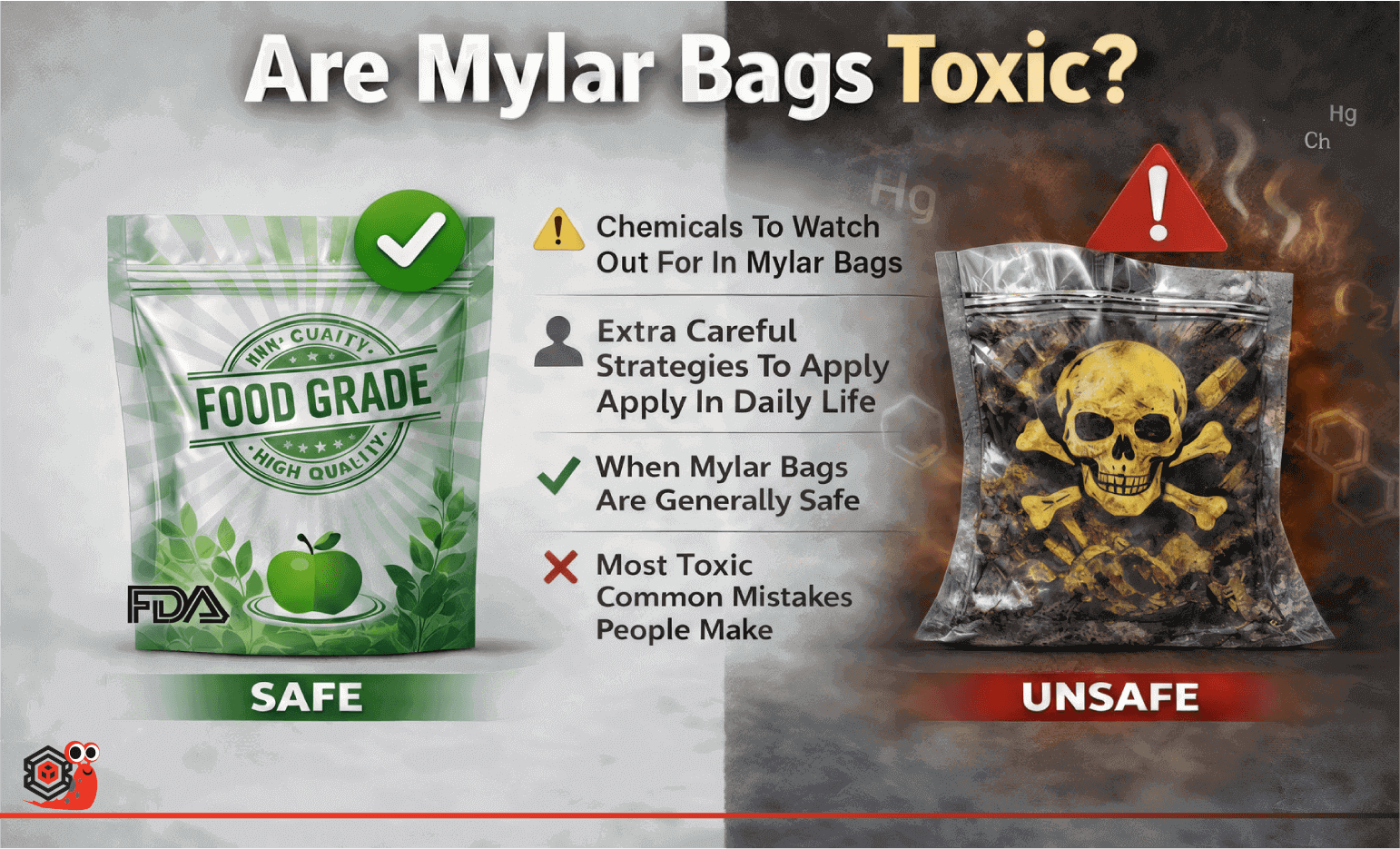
Resolve The Confusion Of Safety And Toxicity In Seconds
Pouches are safe or unsafe depending on quality and usage. Food-grade Mylar bags made for direct food contact are safe. Non-food-grade or poorly made bags can be toxic.
To decide fast, focus on this rule: Mylar itself is safe, misuse and low quality make them toxic.
Safe Mylar bags are clearly labeled as food-grade, have no strong odor, and feature a plain, unprinted inner layer. They are stable when stored away from heat and sunlight.
Unsafe Mylar bags lack food-grade labeling, smell like plastic or chemicals, contain inner coatings or inks, or show signs of spoilage and discoloration.
Quick rule:
- If it’s labeled food-grade and shows no warning signs, it’s safe.
- If there’s doubt, smell, spoilage, or no label, don’t use it for food.
Find Mylar Bag Toxicity Quickly
Start by checking the label. If the bag does not clearly say food-grade or safe for food contact, treat it as unsafe right away. Food-grade labeling is the fastest and most reliable.
Next, smell the inside of the bag. A strong plastic, chemical, or ink-like odor is a not a good sign. Food-safe Mylar should be nearly odorless. Any sharp or unusual smell suggests possible chemical residue.
Then, look at the inner surface. The interior should be smooth, plain, and free from printed designs. If you see ink, patterns, or colored coatings inside the bag, it may not be safe for direct food contact.
Gently press and bend the bag. Food-safe Mylar feels flexible and stable. If the material is sticky or unusually thin, it may be breaking down or poorly manufactured.
Check for discoloration, cloudy patches, or oily residue inside the bag. These signs suggest material degradation or chemical release.
Finally, heat exposure, If the bag was stored in direct sunlight, near heat, chemical migration may have occurred. When in doubt, avoid using the bag for food storage.
If any one of these signs appears, the safest move is simple: don’t use that bag for food.
Chemicals To Watch Out For In Mylar Bags
The main safety concern is not Mylar itself but the things used during the manufacturing process. However, this is the most important section when discussing toxicity. Not all Mylar bags are made the same. Some low-quality pouches may include materials that raise safety concerns, especially if they are not designed for nutrition storage. Research the answer the question, Are Mylar Bags Toxic? by looking at materials and manufacturing standards. Here are some chemicals to watch for:
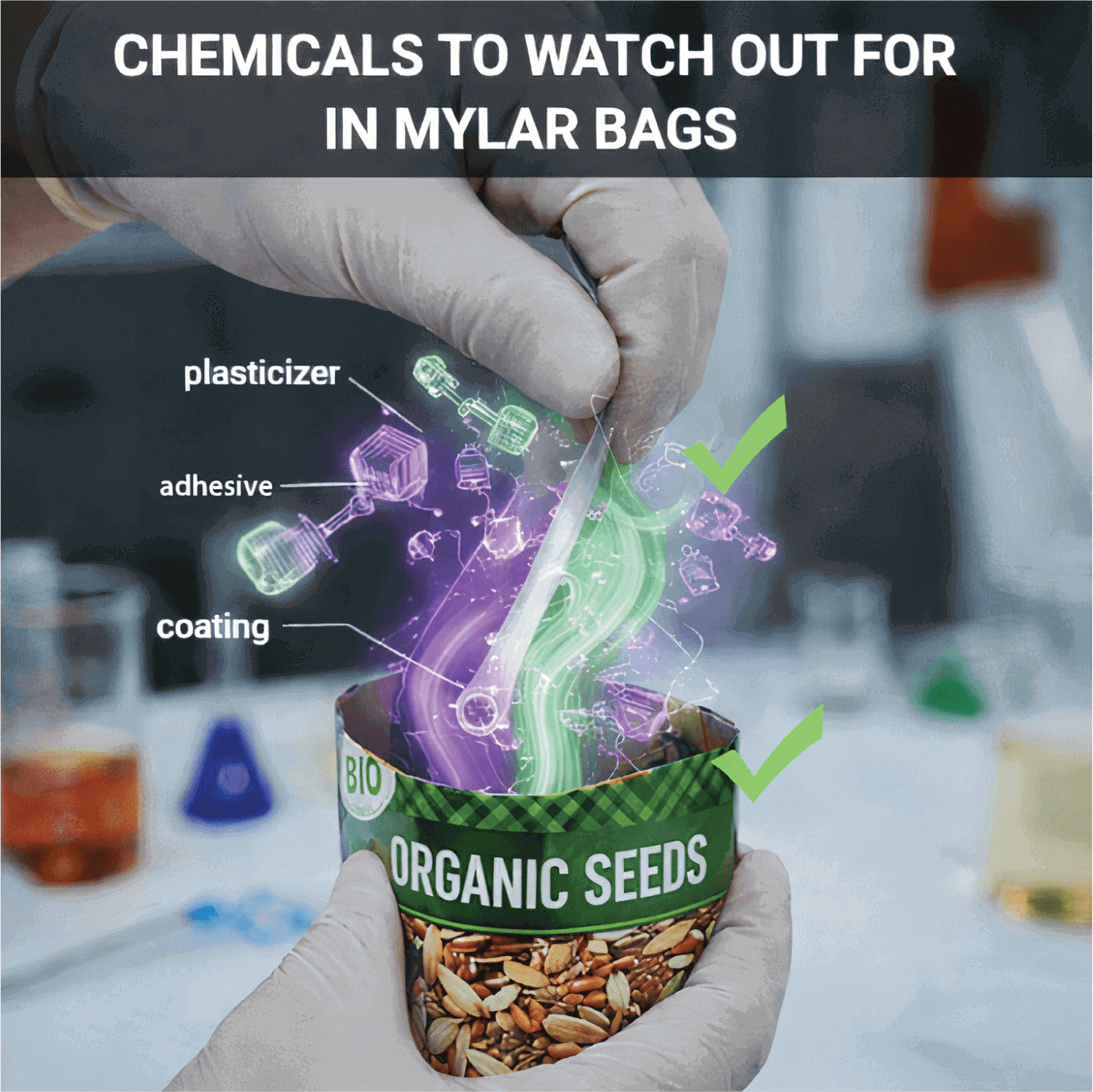
Plasticizers Used in Mylar Bags
Some non-food-grade plastics contain plasticizers that make materials flexible. If present in poor-quality Mylar bag, they may slowly resolve into the food. Over long-term storage, especially in heat or acidic environments, this can affect taste as well as quality. High-quality Mylar has a durable plastic lining that prevent moisture and air from reaching the food.
Toxic Adhesives and Coatings
Mylar bags are made from multiple layers that are bond together with adhesive as well as coating layers. Poor-quality adhesives spoil over time, especially if they get moisture. However, chemicals are also involve in food; that is why FDA-approved, and food-grade adhesives are essential for Retort Packaging.
Local Inks and Dyes Usage
Printed Mylar bags may contain inks that are not food-safe. This is usually a concern when ink is used on the inside layer of the logo and design. If non-food-safe inks are used then they resolve in food, then they can affect the nutrition. Even high-quality printed bags must ensure that high-quality inks are used on the exterior. Low-quality inks are a hidden source of chemical exposure, so checking manufacturer details is important.
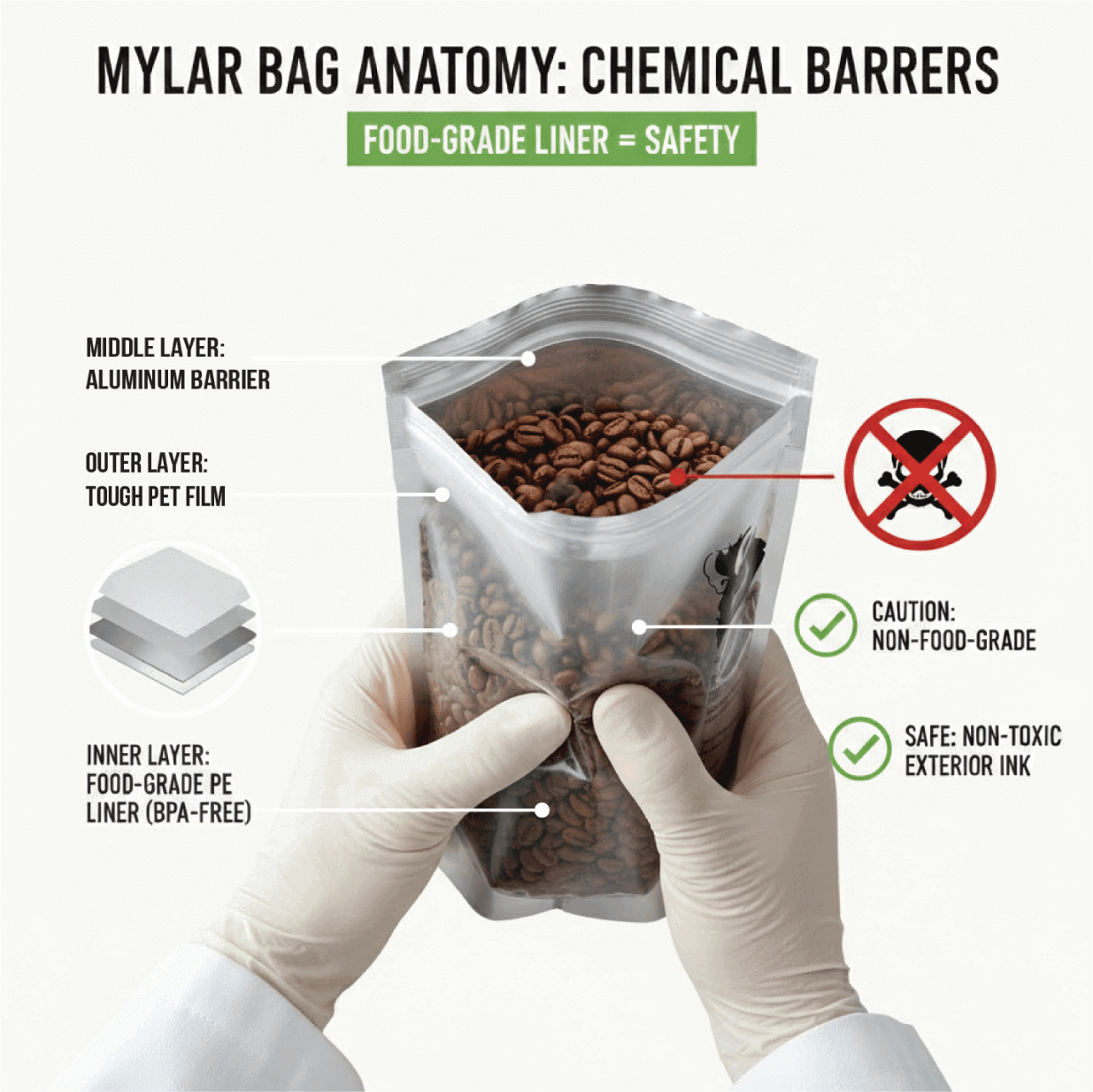
Aluminum Layer Issues
Well, mylar bags contain a thin aluminum layer that is used for odor prevention. When manufactured correctly, this layer is sealed safely. But when not properly made, it reacts under difficult conditions. The key takeaway is simple: food-grade certification matters. Without that confirmation, there is no guarantee that chemical leaching stays within safe limits.
Trusted Ways For Safe Mylar Bag Usage
Pouches stay safe when made from food-grade materials while being used correctly, improving the reputation of the brand. High-quality Mylar film with Polyester film plus aluminum layers keeps odors away. Vacuum seal packaging, along with stand-up pouch design, improves food storage safety. Selecting BPA-free, FDA-approved bags from trusted businesses prevents contamination.
Using Mylar bags with proper sealing can increase shelf life for dry foods. Custom sizes, zipper seal bags like Custom Child Resistant Mylar Bags, and recyclable options like Kraft Stand Up Pouches increase usability, eco-friendliness, as well as usage for medical storage, commercial food storage, and home storage. For known the pouches that are easily usable for food items, then let’s explore Mylar Bags For Food Storage and see how they keep your food fresh for longer!
“Packaging can be theater, it can create a story.” — Steve Jobs
Most Toxic Common Mistakes People Make
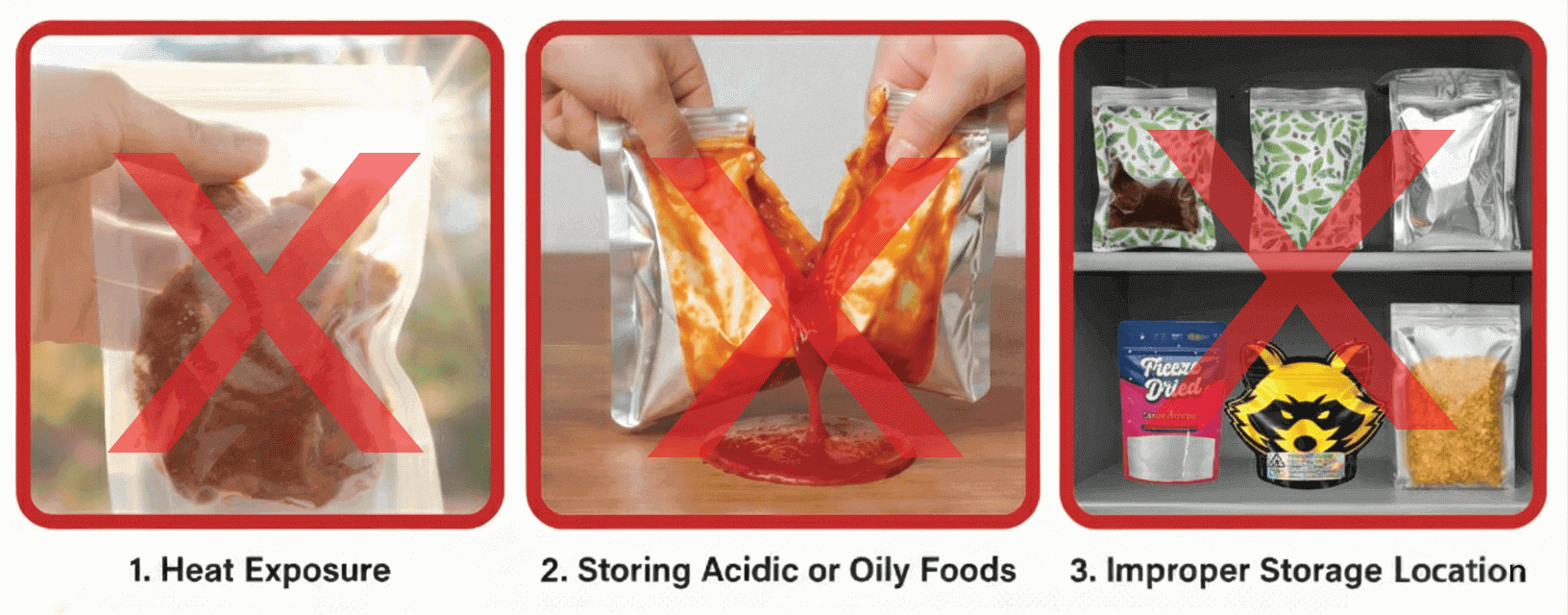
Even a food-grade Mylar bag can become unsafe due to wrng usage. People assume a bag becomes unsafe only because of chemicals, but usage mistakes are often the real problem. Here are some surprising reasons Mylar bags may become unsafe:
- Heat exposure: Leaving bags near heaters or in direct sunlight can spoil your materials faster.
- Improper sealing: Weak seals allow air as well as moisture inside, increasing spoilage and chemical interaction.
- Storing acidic or oily foods: These foods interact more aggressively with the food packaging industry materials.
- Reusing single-use bags: Reuse can weaken layers and compromise safety.
- Unknown suppliers: Cheap bags without certifications are a major risk factor.
Let’s see the full specifications of Mylar Bags here that will amaze you in no time.
Regulatory And Safety Standards–You Must Know
Safety standards exist for a reason; they help separate safe packaging from risky options. Food-grade Mylar bags should follow FDA approval and food safety compliance. Look for clear product labeling, BPA free certification, Eco Friendly Pouches and sustainable packaging. Eco-friendly materials, recyclable packaging, and transparent manufacturer information support consumer awareness.
Myths vs. Facts About Mylar Bag Toxicity
When comparing storage options, it’s important to know, Are Mylar Bags Toxic? for sensitive foods, as there’s a lot of confusion about their safety. There’s a lot of confusion about Mylar bags. Here’s a quick myth vs. fact breakdown:
| Myth | Fact |
| All Mylar bags are toxic. | Food-grade Mylar (BOPET) is safe; toxicity occurs only with poor coatings, inks, heat, or misuse |
| Shiny packaging means chemicals leak into food. | An aluminum layer acts as a moisture barrier when properly sealed, while shiny layers, like those included in Custom Holographic Mylar Bags can make the pouches attractive without affecting the inner material. |
| Pouches are unsafe for long-term storage. | Flexible Pouches are widely used for long-term dry food storage. |
| Toxicity is always immediate. | Risks usually develop from heat, misuse, and poor-quality materials over time. |
The improper inks or local inks produce chemical reactions or distortion of print, that can affect the packaging. The printing on mylar bags must be in a professional way that seems really authentic and feels permanent on display, wanna see?
Extra Careful Strategies To Apply In Daily Life
People wanted Mylar bags that felt safe the moment they were opened, with no chemical smell and no risk to food quality. That idea shaped a better approach to packaging, one focused on clean materials, smooth inner layers, and careful printing choices. It also offers a wide range of customization options in pouches like Custom Spout Pouches for easy pouring of liquids, tear notches for easy opening.
Moreover, Custom Stand Up Pouches for easily standable, and Custom Gusseted Bags that are gusseted from three sides to make them more attractive for stable on retail shelves. This is where Printing Shell fits naturally into the story, offering toxic-free Mylar bags built for trust and reliability. For anyone ready to choose safer packaging without compromise, contact experts today and make confidence part of every package.
Conclusion
Most of the Mylar bags are not toxic. When they are food-grade, properly sealed, and used under the right conditions, they are widely considered safe. Most safety concerns come from poor-quality materials or incorrect use rather than the material itself. Before storing snacks or grains, ask yourself, Are Mylar Bags Toxic? to ensure your food stays safe. However, you can see how these solutions deliver innovative options for Custom Packaging Solutions Companies to maximize the safety and shelf life of items.
Frequently Asked Questions (FAQs)
Yes, food-grade Mylar bags are BPA-free because they are made from polyester (PET), not polycarbonate plastics. Always verify that the bag is labeled food-safe.
No, the aluminum layer is sealed between plastic layers and never comes into direct contact with food. Under normal storage conditions, leaching does not occur.
Mylar bags can be reused if they are clean and previously used for dry foods only. However, avoid reusing bags that held oily foods or show seal or heat damage.
No, they do not contain phthalates, that are mainly found in PVC plastics. Using certified food-safe bags ensures they are free from these chemicals.
Mylar bags can typically handle temperatures between -60°F to 300°F without degrading or releasing toxins. However, for optimal safety and seal integrity, store them in cool, dry places away from extreme heat or direct sunlight.