Protect your food and improve its shelf life with safe storage solutions. Discover how Mylar Bags For Food Storage keep your food fresh, and secure for the long term. In this article, you’ll learn tips on proper usage, sealing steps that stop most failures, and ways to maximize food packaging safety standards when storing food. Stop worrying about spoiled food; get expert-approved storage tips today!
How Mylar Bags Protect Stored Food
Food spoils because of a few sneaky enemies: oxygen, moisture, light, and heat. Mylar bags tackle several of these at once! They block light, keeping flavors, colors, and quality intact. Combined with oxygen absorbers, Mylar slows oxygen exposure to prevent stale taste, nutrient loss, and faster spoilage. Moisture is another culprit, but Mylar is much better at keeping it out than regular kitchen bags. Just remember: wet food, poor sealing, or storing in hot spots can still cause trouble. Follow the steps carefully for the best results.
Items That Store Well in Mylar Bags
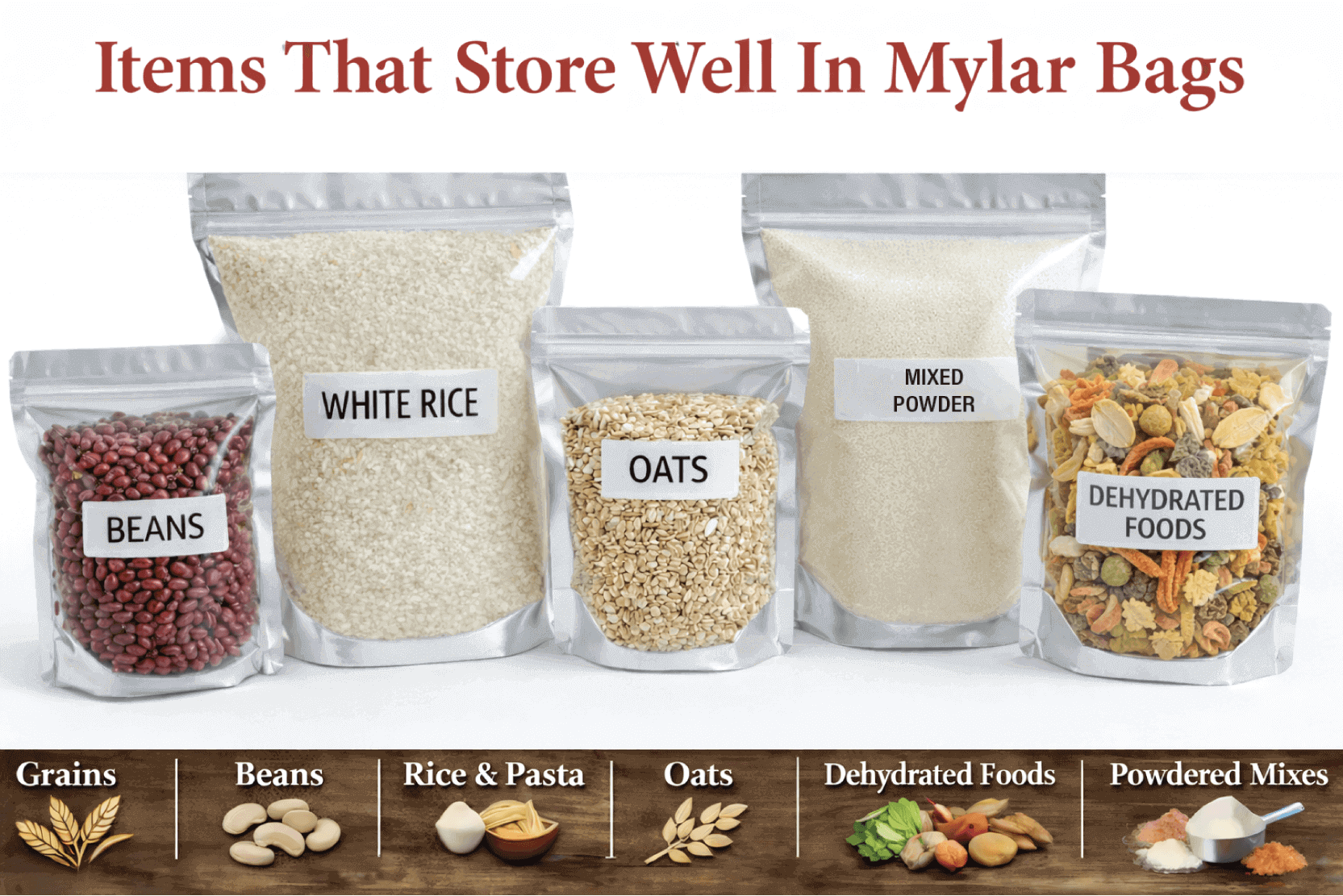
Mylar bags are best suited for dry, low-moisture, low-fat foods. These foods remain stable when oxygen is reduced, and moisture is kept out. Common pantry staples fit this category well and respond predictably to Mylar storage.
Dry grains, beans, rice, pasta, oats, and similar foods store very well when packed correctly. However, dehydrated foods that are fully dried also perform well, as do powdered products like flour or drink mixes when kept cool. These foods store well because they don’t contain much moisture and don’t have high oil content. Less moisture means lower mold risk. Lower oil means slower rancid smells. Let’s discover Custom Mylar Bags that combine protection with brand logo printed packaging!
Top Foods That Should Not Be Stored
Mylar bags are great for dry foods, but they are not the right tool for everything. Avoid storing: Camping food storage, commercial food packaging, survival food storage keeps fresh foods (fruits, vegetables, meat, cooked meals), wet or moist foods, soft foods that hold moisture of pet food mylar packaging, high-oil foods (many nuts, granola with oils, oily snacks), items that can trap moisture (some dried foods that still feel flexible).
Why? Moisture trapped inside a sealed bag can create smells. High-oil foods go rotten faster, even if oxygen is reduced. If your food feels even slightly damp, fix that before packing. Mylar bags do not “dry out” food. They lock the condition in. Using mylar bags for food storage can protect your items from moisture.
“Proper packaging preserves every food’s flavor, freshness, and quality for longer enjoyment.”
Step-By-Step Food Storage Process Using Mylar Bags
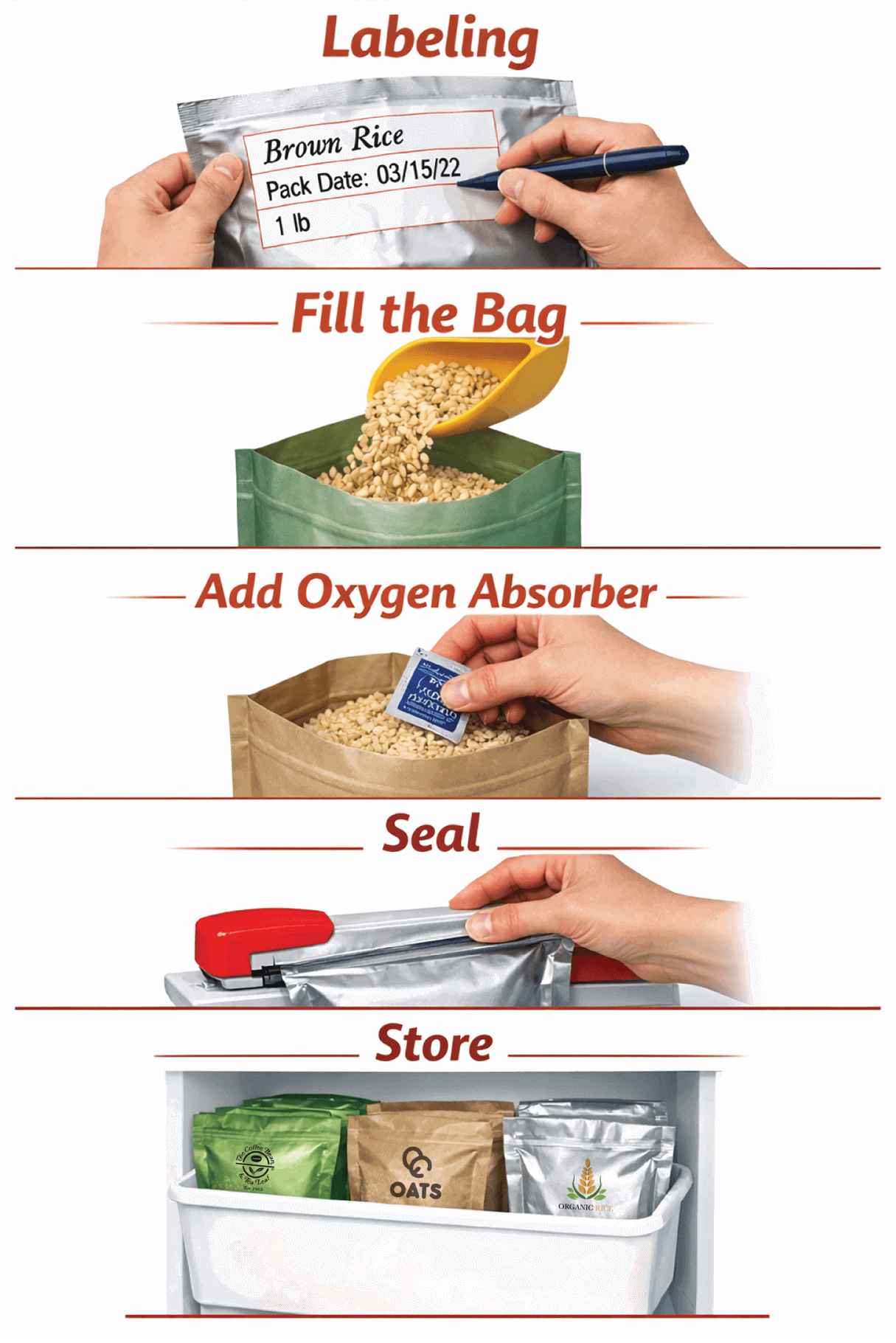
Food-grade mylar bags can dramatically boost shelf life extension messaging when done correctly. Before starting, gather all necessary items: polyethylene laminated mylar bags, oxygen absorbers, a heat sealer or household iron, a flat surface, permanent markers or private label mylar bags, and optional buckets or bins for added protection.
Step 1: Labeling: Write the food name, packing date, bag size, and any cooking or expiry notes on the bag before filling. This prevents confusion later as well as keeps your storage system organized.
Step 2: Fill the Bag: Pour dry food storage solutions into the bag slowly and gently tap it down to settle the contents. Leave enough space at the top for a proper seal.
Step 3: Add Oxygen Absorber: Place the oxygen absorber inside the bag. It can sit on top or slightly inside the food; its job is to remove oxygen to preserve freshness. People often pair mylar bags for food storage with oxygen absorbers for mylar bags.
Step 5: Seal: Use a heat sealer or iron to close the bag completely. Features a durable Mylar bags material composition (polyester film) combined with an aluminum foil layer packaging, ensuring airtight protection.
Step 6: Store: Place sealed bags in buckets or bins for pest protection and easier stacking. However, keep in a cool, dry, dark place for maximum shelf life of pouches.
Following these steps creates an emergency food storage, repeatable system that keeps food safe.
Choose eco-friendly food packaging with sustainable packaging solutions, including reusable Mylar bags, to protect your products while reducing environmental impact.
“Mylar bags for food storage turn everyday ingredients into forever treasures.”
Perfect Thickness and Size Guide
Let’s check out Mylar Bags to understand how premium food packaging features make them stand out. Two things matter here: bag thickness in microns mil measurement and bag size.
Thickness (mil)
“Mil” is a thickness measurement. Thicker bags resist punctures and small tears better.
3–4 mil: okay for lighter storage and gentle handling.
5 mil: strong common choice for long-term food storage bags.
7 mil: tougher for heavy use, sharp edges, or rough handling.
If you’re packing rice, beans, or pasta and placing them inside a bucket, 5 mil is a strong balance. If you expect lots of handling, stacking, or you want extra durability, go thicker.
Size
Choose size based on how you use food:
Small bags: snacks, spices, small pantry portions.
Medium bags: weekly or monthly staples.
Large bags: bulk food storage packaging for buckets.
Bigger is not always better. Many people do better packing food in several medium bags instead of one giant bag. If you mess up, don’t panic. Cut above the seal and re-seal. Mylar gives you room for fixes. Protect your food and snacks with custom printed mylar bags, doable in both matte finish mylar bags and glossy finish packaging to match your style. Once you’ve decided the right path, feel free to contact experts now to finalize your order details.
Essential Tips for Food Storage
If you’re learning how mylar bags for food storage keep food fresh, then check out Printing Shell for free shipping worldwide plus no setup fees on all packaging orders. Food storage compliance regulations should feel safe, as following these tips keeps it reliable:
- Always wash and thoroughly dry your hands before handling or packing any food for storage.
- Use only clean scoops and maintain a sanitized workspace when preparing BPA-free food storage bags and FDA approved food packaging.
- Avoid packing any food that smells off or shows signs of spoilage or decay.
- Clearly label every bag with contents and date to prevent confusion or accidental use.
- Store food away from chemicals, fuels, or any odor-proof storage bags that could contaminate it.
If you live in a humid area, your storage location matters even more. You can improve shelf life significantly by sealing foods in mylar bags for food storage. Try to keep your packed bags in a stable indoor space. Don’t think that all pouches act as a safe for food storage. So read the article where you discover the full concept of Are Mylar Bags Toxic in 5 minutes.
Conclusion
Mylar bags are a highly effective solution for storing food safely over long periods. Using high-quality, food-grade bags ensures that harmful additives are avoided, keeping your food safe. Proper sealing, storing in a dry environment, as well as following recommended guidelines help maximize shelf life. Tamper-evident packaging ensures that every product reaches customers securely, showing clear signs if it has been opened. Let’s explore these Custom Product Packaging and see how it protects your items while making them look premium!
Frequently Asked Questions (FAQs)
Not always, oxygen barrier food storage is recommended for most dry foods because they slow down staleness and quality loss. Some foods like salt do not need them, and sugar is often stored without absorbers to avoid hardening.
Yes, Mylar bags can be recyclable mylar alternatives if they are clean, dry, and not damaged. You will need to cut off the old seal and reseal the bag with a new heat seal. There are also resealable ziplock mylar bags, heat sealable mylar bags, transparent window mylar bags, as well as stand up pouch design.
A bag may not tighten if there was very little oxygen inside, the absorber was retail-ready food packaging used up, or the food releases air slowly. Lack of tightening does not always mean failure, but seals should be checked carefully.
No, vacuum sealing compatibility removes air but does not block light or moisture as well as Mylar. Many people use both together, but Mylar bags with oxygen absorbers offer better long-term stability for dry foods.
If moisture is visible, the food may not be safe to store long-term. Moisture-proof food packaging is best to open the bag, inspect the food carefully, and avoid resealing unless the food can be fully dried again.